UXT React
The React flavor of the UX Toolkit — primitives, layouts, palette, and Octave Design System tokens wired in. Migration guide and component docs live in Storybook. Refresh of colors, typography, and all components ships May 22.
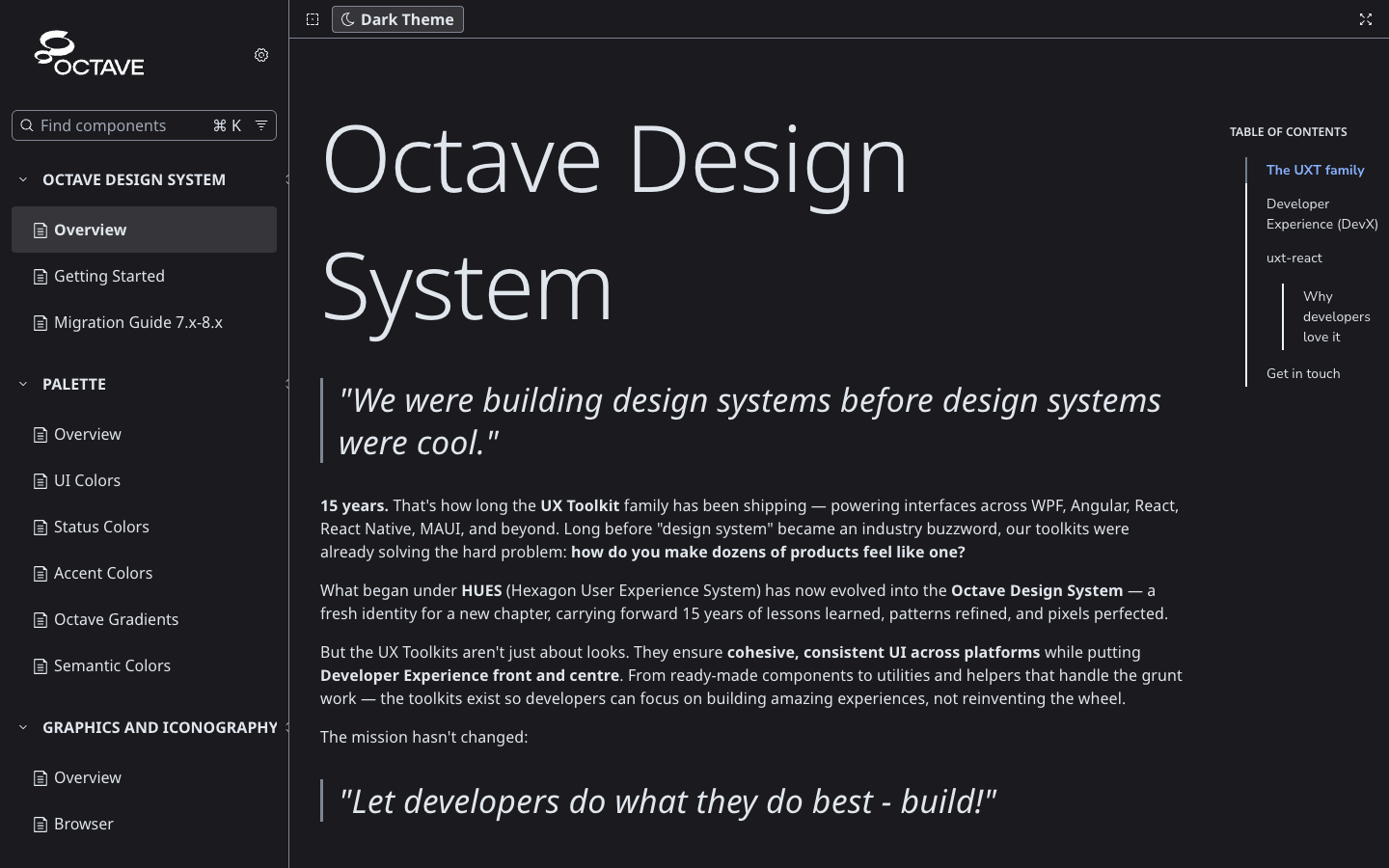
The React flavor of the UX Toolkit — primitives, layouts, palette, and Octave Design System tokens wired in. Migration guide and component docs live in Storybook. Refresh of colors, typography, and all components ships May 22.
The Angular flavor of the same toolkit — same component set, same tokens, same DX commitments. Same May 22 refresh, so React and Angular product teams move forward in lockstep.
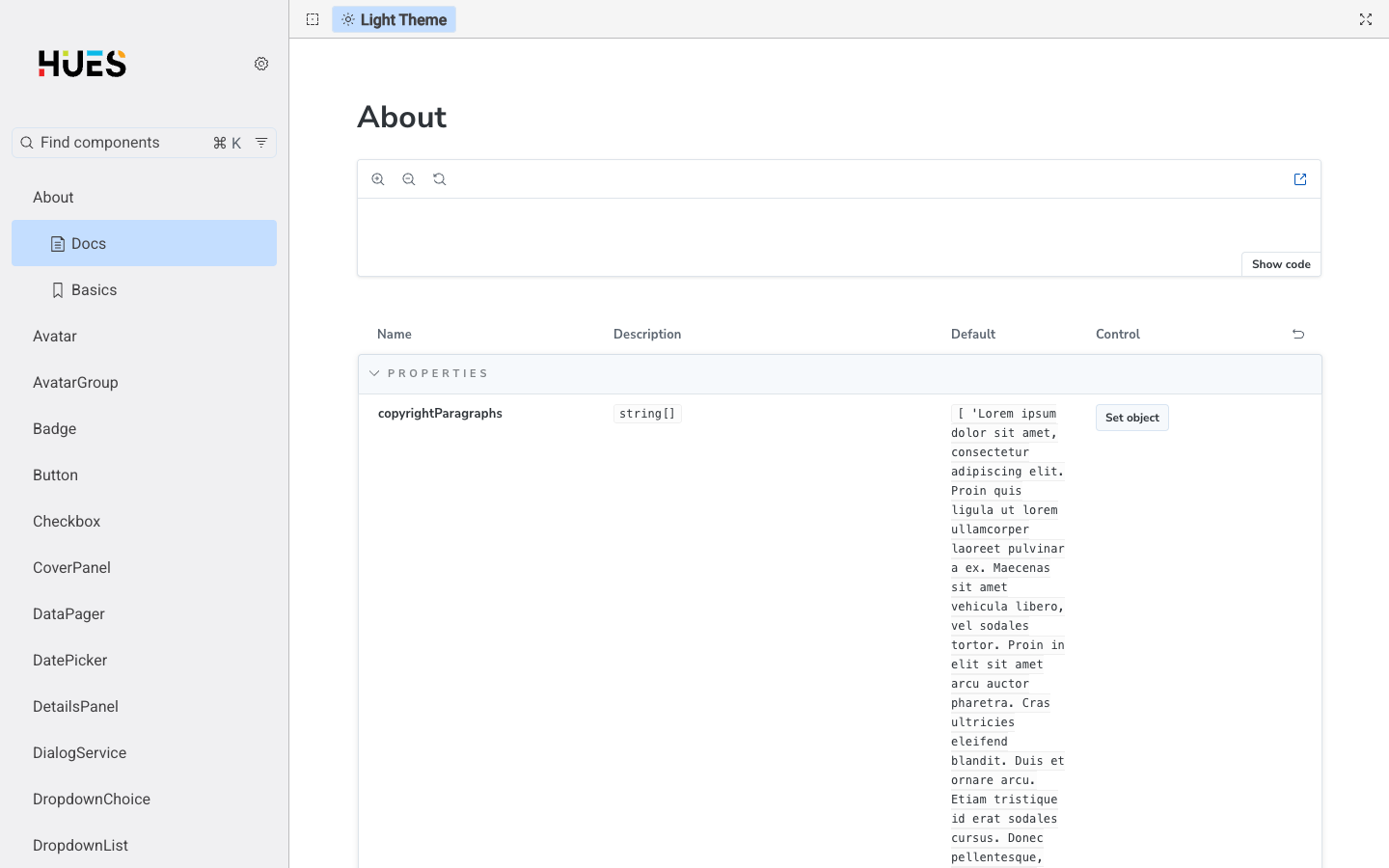
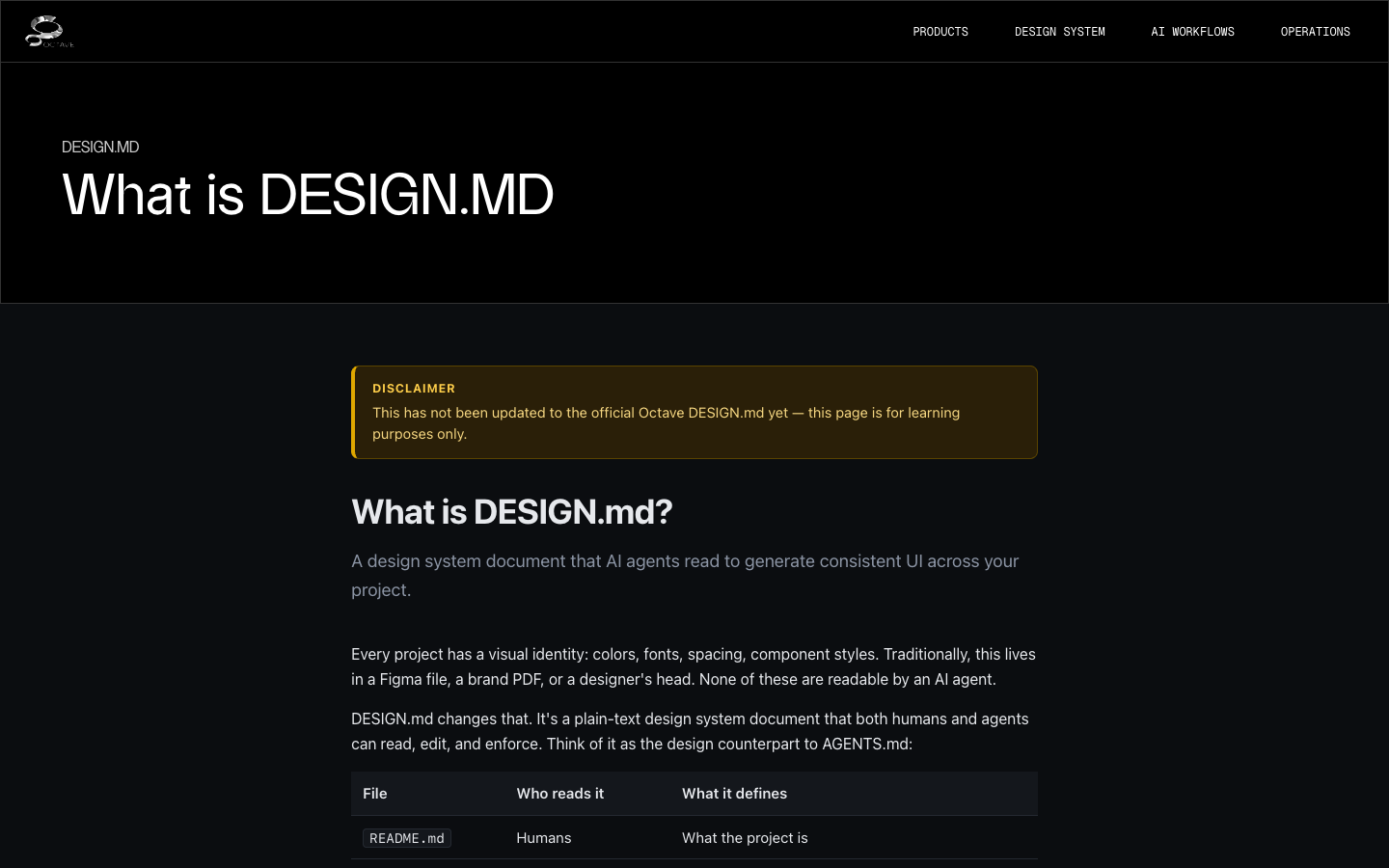
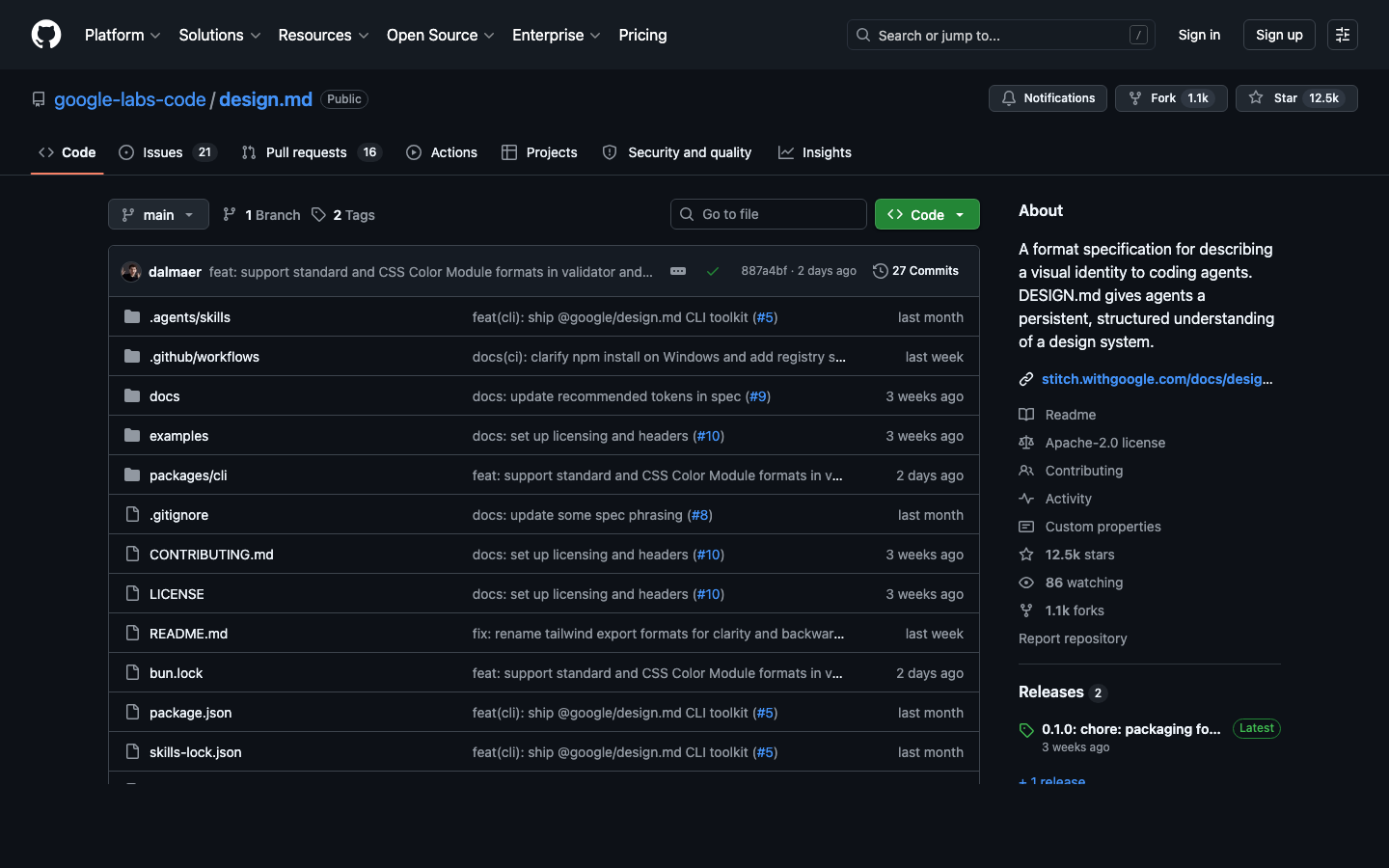
Agent-readable design-system document. YAML front matter holds machine-readable tokens (colors, type, spacing); markdown body holds human-readable rationale. The design counterpart to AGENTS.md — single source of truth across humans and AI.
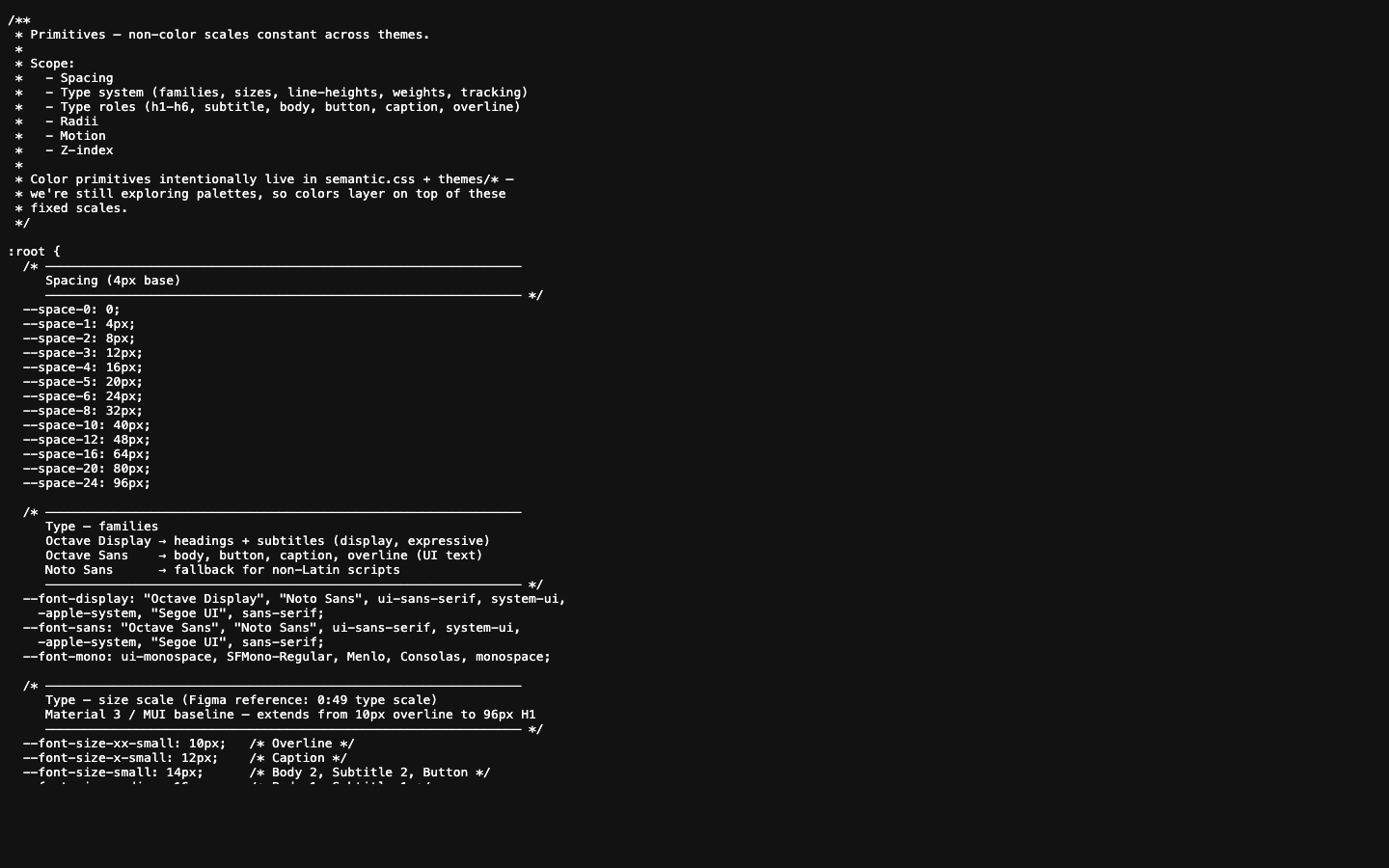
The runtime CSS in octave-design-system-tokens/ (primitives, semantic colors, themes) is generated from DESIGN.md's YAML front matter. One source of truth, two surfaces — the markdown is what humans and agents read; the CSS is what browsers and components consume. CI guards against drift on every change.
Agent operating manual at the repo root. Project goals, conventions, gotchas, and skill pointers — everything an AI agent (or new human contributor) needs to start working productively in this codebase.
Canonical index of agent skills available in a project — what each skill does, when it triggers, and where it lives. Pairs with the Octave skills repo so teams discover capabilities instead of rebuilding them.
Project overview for humans — what it is, who it's for, how to run it. The familiar top of every repo, kept short and high-signal so it doesn't drift out of date.
Multi-app home surface — "My apps" grid with activity counts, unified recents feed across apps, Co-Labs workflows row, and an "Other Octave products" discovery section.
Next iteration of the right-side AI chat surface — persistent across products, with composer expansion, multi-turn threads, and product-aware context handoff.
First-party icon library replacing the Material Symbols backup. Stroke-1, geometric, tuned to the Octave display family. Batch-exported from Figma into UXT.
EAM, InConcert, Duet, Aspect, Schematics, Titan — each mounted into the same shared shell with consistent navigation, search, and chat surfaces. One Octave, not eight.