May 10, 2026
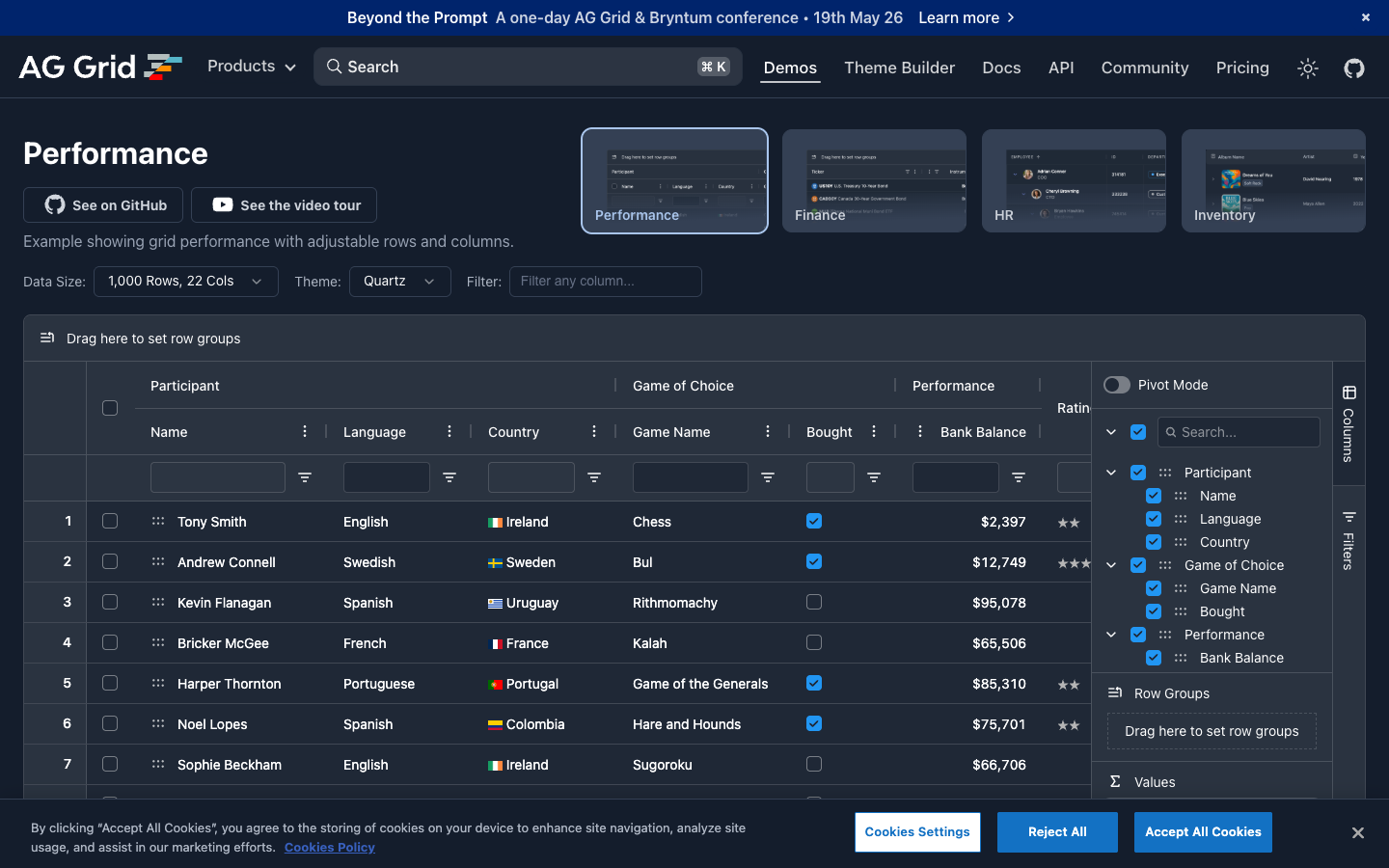
Tables & data grids — picking one library
All six engineering teams are aligning this week on a shared table / data-grid / column library. Today we're a mix of Kendo, Bryntum, and AG Grid — three licenses, three component models, three learning curves. The goal is one library, one source of expertise, consistent grid UX across every Octave product.
Where we are today
- Kendo (Telerik) — in use on a subset of teams; mature React/Angular component set
- Bryntum — in use on a subset of teams; strong for scheduling and Gantt-style grids
- AG Grid — in use on a subset of teams; deep enterprise grid features and virtualization
This week
- Surveying all six teams on current usage, pain points, and must-have grid features
- Comparing the three contenders side-by-side on perf, license cost, API ergonomics, and UXT integration
- Discussing and collaborating — no decision yet, this is an open conversation, weigh in
May 10, 2026
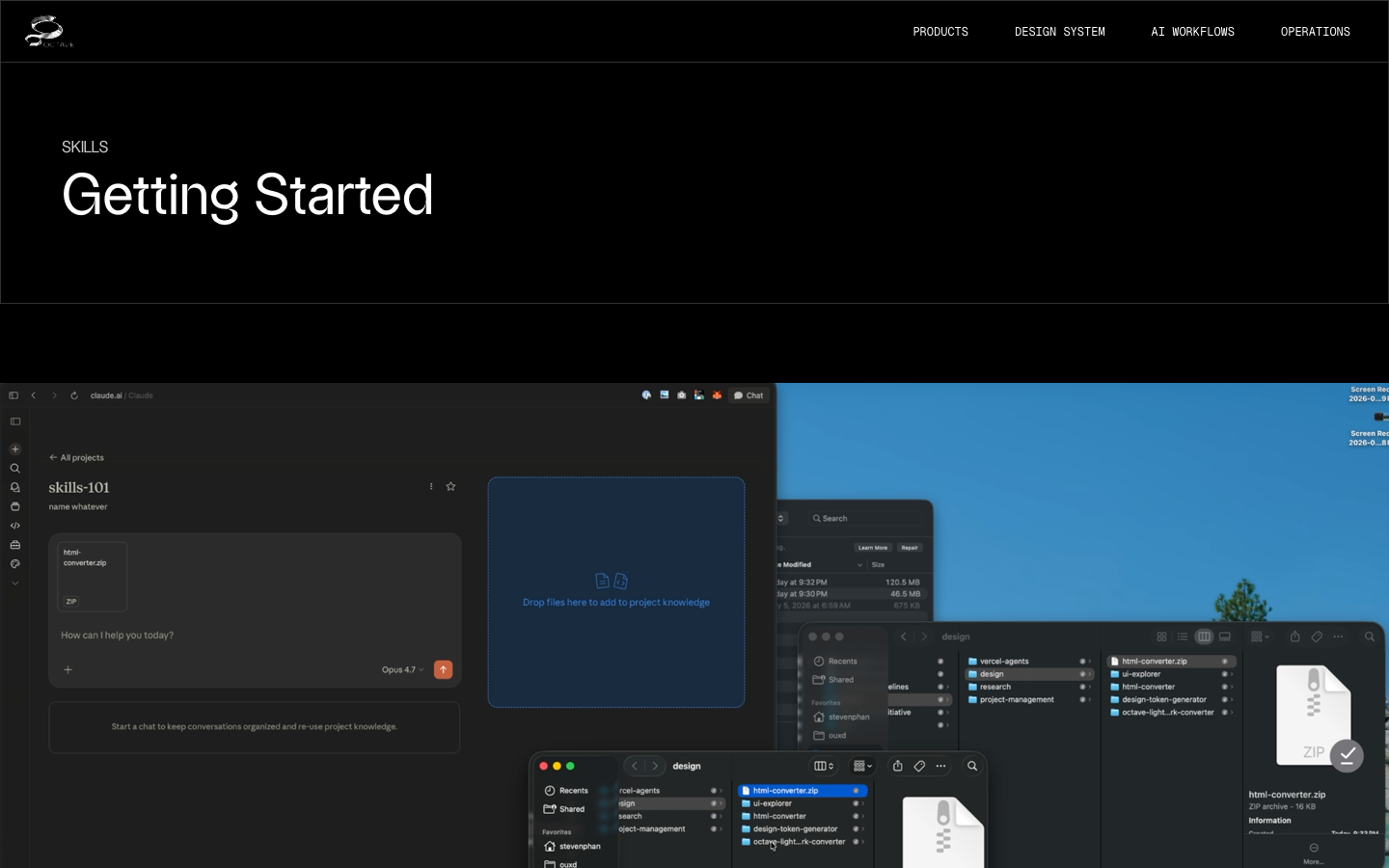
Skills — 101 + official repo
New AI Workflows section on the site documenting how we use agent skills at Octave. Two pages: a Skills 101 explainer for getting started, and the official Octave skills repo as a canonical index of what exists and how it's wired.
What's new
- Skills 101 — getting started, why we use skills, and how they slot into Claude/Claude Code workflows
- Skills repo — canonical index of Octave's first-party skills with usage notes and source links
May 10, 2026
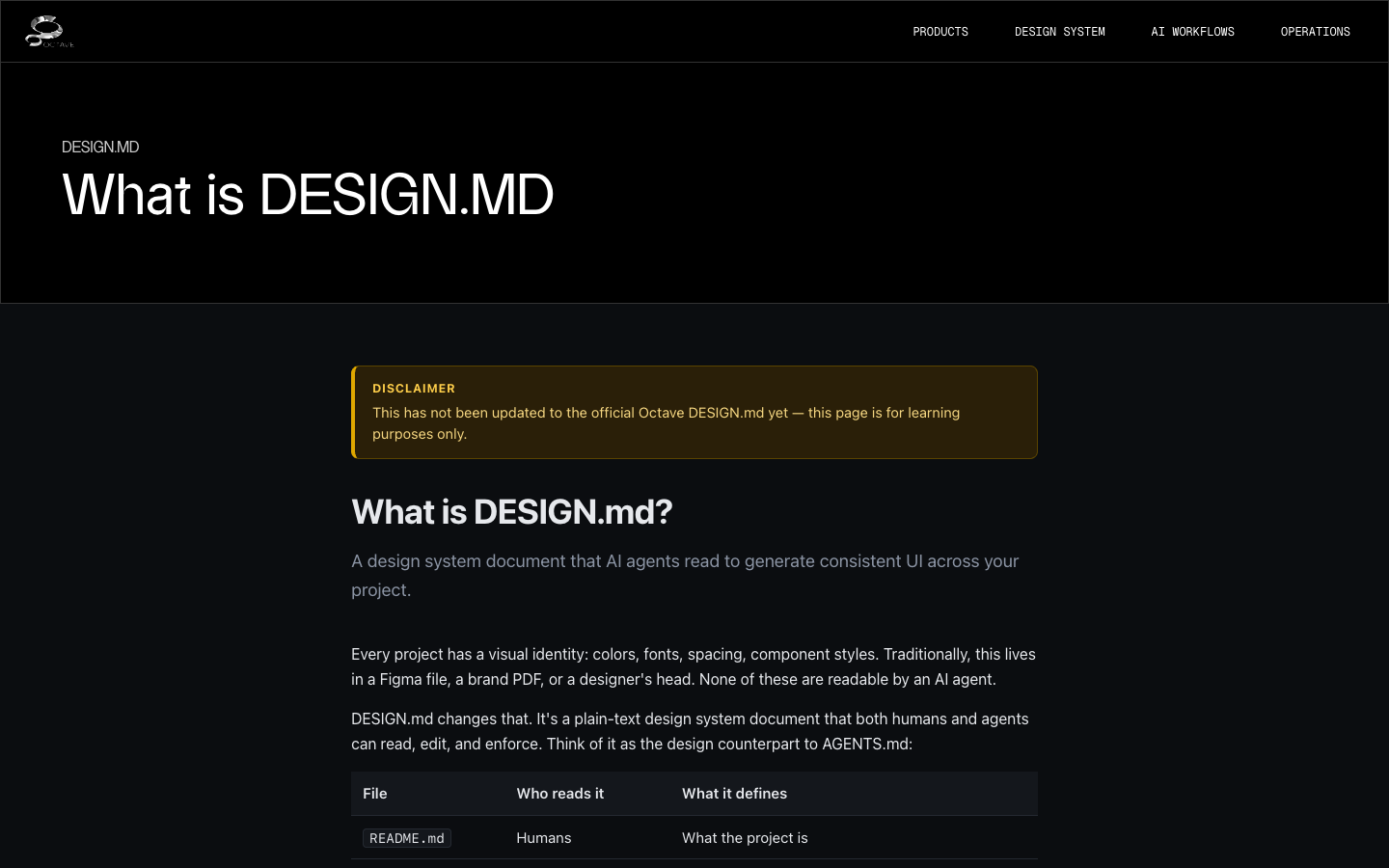
DESIGN.md — design systems as plain text
New Design System concept page on the site: DESIGN.md is a plain-text, AI-readable design-system document — the design counterpart to AGENTS.md. Codifies tokens (machine-readable in YAML front matter) and rationale (human-readable prose), so both humans and agents can read, edit, and enforce a single source of truth.
What's new
- What is DESIGN.md — concept overview, why current sources (Figma, brand PDFs, designer's head) aren't agent-readable
- The specification — formal token schema, section structure, and type system; YAML front matter + markdown body
- Inspired by Google Labs' open-source
design.md (github.com/google-labs-code/design.md) — format spec for describing visual identity to coding agents
May 7, 2026
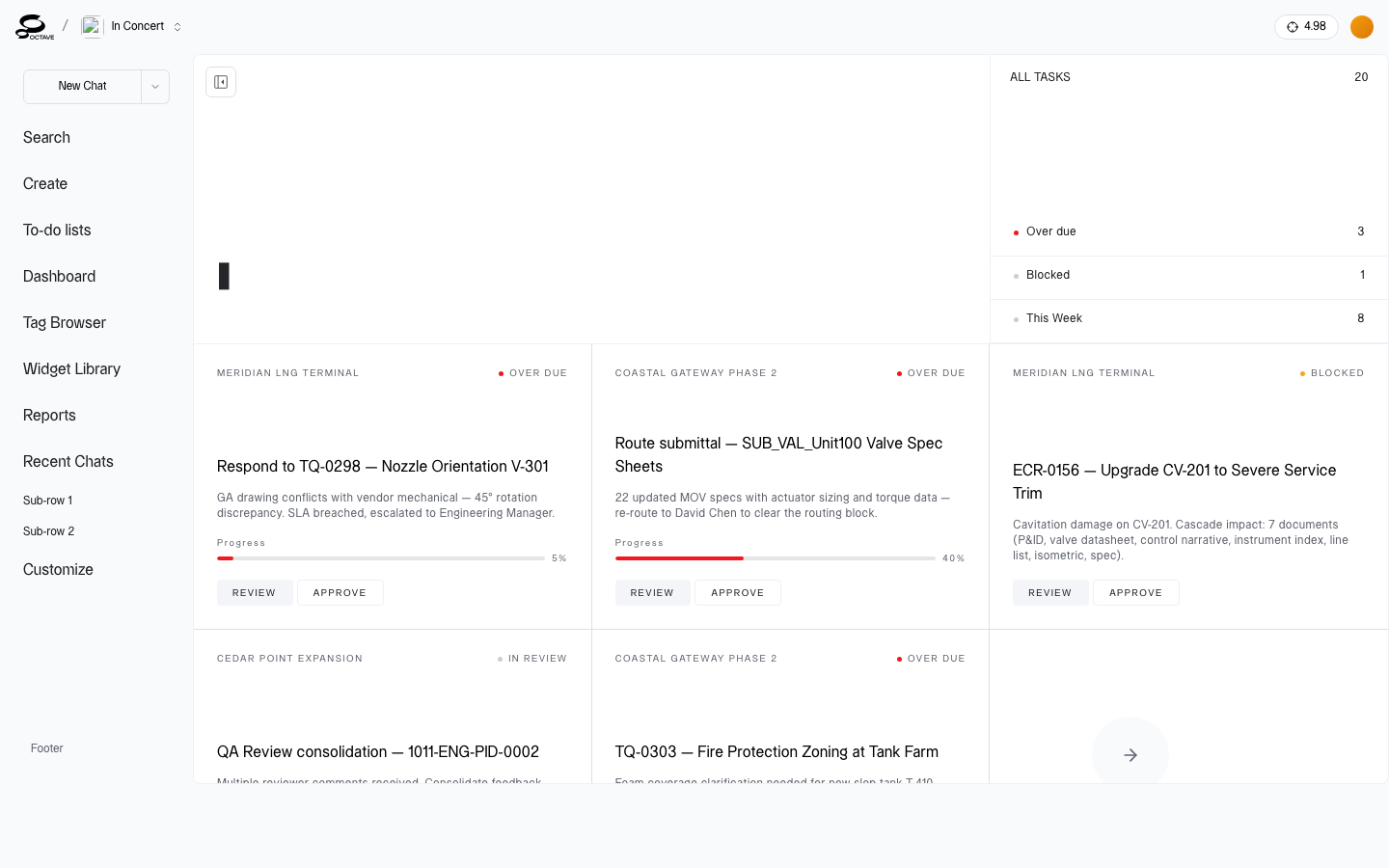
Design system review — 5/7
First design-system review surface — a component playground for the 5/7 review. Nine scaffolding pieces plus five product views, all composed into the shared app shell so each one can be evaluated in isolation or in context.
Components
- Type scale — H1–H6, subtitles, body, button, caption, overline (Octave Display + Sans)
- Side navigation — V1 ports the InConcert traditional prototype
- Icons — Material Symbols Outlined at wght=200 (backup set until Octave 154 ships)
- Aria chat panel — 340px right-panel port of the InConcert Aria surface
- Main content panel — extensible canvas every product mounts into
- Profile flyover — account, theme/language/chat-position preferences, sign out
- Search modal — center-screen palette with quick actions and recent chats
- Top bar — logo, workspace switcher, status pill, avatar (dark + light)
- App shell — top bar + side nav composed via layout.tsx
Product views
- Cross-app experience (home) — multi-app grid, unified recents, Co-Labs workflows
- EAM — operations, work orders, asset registry
- InConcert — daily summary, task cards, todo table, 5-chart insights grid
- Duet — active alarms, asset health table, runtime trends
- Aspect — schematic-card grid with embedded list view and AI Action pills